
plans
OMAD (One Meal a Day): A Complete Beginner's Guide
By Dawnly Team
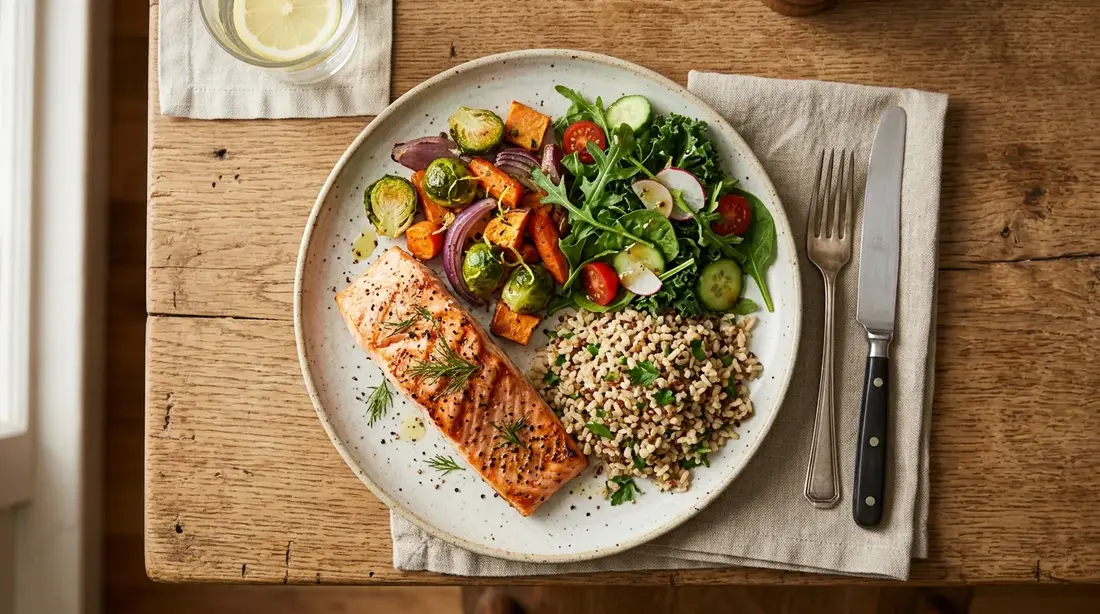
OMAD means One Meal A Day: you eat all of your daily calories in a single meal, usually inside a one-hour window, then fast for the remaining 23 hours or so. It is an advanced form of intermittent fasting, sometimes written as the “one meal a day diet.” Most people use it to simplify eating and create a calorie deficit for weight loss. It works for some, but it is not the easiest place to start, and it is not right for everyone.
If you are new to fasting altogether, it helps to understand the basics first with our guide to intermittent fasting for weight loss before you jump to the most demanding schedule.
Key Takeaways
- OMAD is a 23:1 fasting pattern: one meal, roughly a 23-hour fast.
- Weight loss on OMAD comes from eating fewer total calories, not magic.
- The main risks are low protein intake, hunger, energy dips, and overeating in one sitting.
- Ease in from 16:8 or 18:6 first, and skip OMAD if you are pregnant, on medication, or have a history of disordered eating.
- This is general information, not medical advice.
What is OMAD (one meal a day)?
OMAD is the strictest common form of time-restricted eating: you eat once per day and fast for the rest. The name describes a 23:1 pattern, meaning about 23 hours of fasting and a 1-hour eating window. During the fast you drink water and other zero-calorie fluids; during the window you eat a full, complete meal.
It suits people who already fast comfortably and prefer fewer decisions about food. If counting three meals feels like a chore, one meal removes that entirely. Cleveland Clinic and Johns Hopkins Medicine both describe time-restricted eating as one of the more popular fasting approaches, and OMAD sits at the extreme end of that spectrum.
Think of the fasting scale like this. Beginners often start at 16:8, which is a 16-hour fast and an 8-hour window. From there some move to 18:6, then 20:4, and finally OMAD. Each step shortens the window and lengthens the fast, so OMAD asks the most from your appetite and your routine.
OMAD, or one meal a day, is a 23:1 time-restricted eating pattern in which all daily calories are consumed in a single roughly one-hour window. Health systems including Cleveland Clinic classify it as an advanced form of intermittent fasting, best suited to people already comfortable with longer fasts.
How does OMAD work for weight loss?
OMAD drives weight loss mainly by cutting how much you eat, not by any special metabolic trick. Squeezing a full day of food into one meal is hard, so most people naturally take in fewer total calories. Registered dietitians at large hospital systems consistently point to this calorie deficit as the real mechanism behind fasting results.

Here is the honest version. You lose fat when you burn more energy than you consume over time. OMAD makes that deficit easier to reach for some people because there is simply less opportunity to eat. One plate, one time, done.
The window itself gets too much credit. Two people can both do OMAD and get opposite results, because one eats a balanced plate while the other fits an oversized takeout order plus dessert into that same hour. The schedule sets the stage, but the food on the plate decides the outcome.
There is a secondary effect worth knowing. When you go many hours without eating, insulin levels fall and your body leans more on stored fat for fuel. That shift is real, but it does not override total calories. If your one meal is enormous, the deficit disappears and so does the fat loss.
What are the real OMAD benefits?
The biggest OMAD benefit is simplicity: one meal means no meal planning, no packed lunches, and no mid-morning snack decisions. For busy people, that reduction in daily food choices is the main draw, and it is a legitimate one. Fewer eating occasions can also mean fewer chances to snack mindlessly.
Beyond convenience, OMAD can support fat loss when the single meal stays reasonable in size. Some people also report steadier appetite once they adapt, because their body stops expecting food every few hours. Keep your expectations measured here, since individual responses vary widely.
Let me be clear about what OMAD does not promise. It is not proven to be superior to gentler fasting schedules for most people, and the research on very long daily fasts in humans is still limited. Harvard T.H. Chan School of Public Health notes that much fasting evidence comes from shorter windows and shorter study periods.
The primary benefit of OMAD is behavioral simplicity: a single daily meal eliminates meal planning and reduces snacking opportunities. Nutrition experts at institutions such as Harvard T.H. Chan School of Public Health caution that evidence for very long daily fasts remains limited compared with more moderate time-restricted eating windows.
Does that mean OMAD is pointless? Not at all. It just means the wins come from consistency and calorie control, not from the label.
What are the risks and downsides of OMAD?
The main risk of OMAD is undernutrition: it is genuinely hard to hit your daily protein, fiber, vitamins, and minerals in one sitting. Most adults need a substantial amount of protein spread across the day for muscle maintenance, and cramming it into one meal is uncomfortable and easy to miss. This is the downside dietitians raise most often.
Hunger and energy dips are the next hurdle. During your long fast you may feel irritable, foggy, or low on energy, especially in the first week or two. Some people also get headaches or trouble sleeping when they eat a very large meal late at night.
There is also a behavioral trap. Because you arrive at your meal very hungry, OMAD can encourage overeating or even bingeing, which cancels the deficit and can feed an unhealthy relationship with food. Many people who try OMAD describe the same pattern: the fasting hours feel fine, but the meal turns into a stress-driven feast that leaves them worse off than three normal meals would.
One more caution. Very restrictive patterns are not appropriate for everyone, and forcing OMAD when your body is signaling distress is a mistake. If you feel faint, shaky, or unwell, eat something and stop.
What should your OMAD meal look like?
Your OMAD meal should be a balanced plate built around protein, vegetables, healthy fats, and complex carbohydrates. Because it is your only meal, nutrient density matters far more than it does for someone eating three times a day. Aim for real, whole foods that deliver protein and fiber, not just calories.
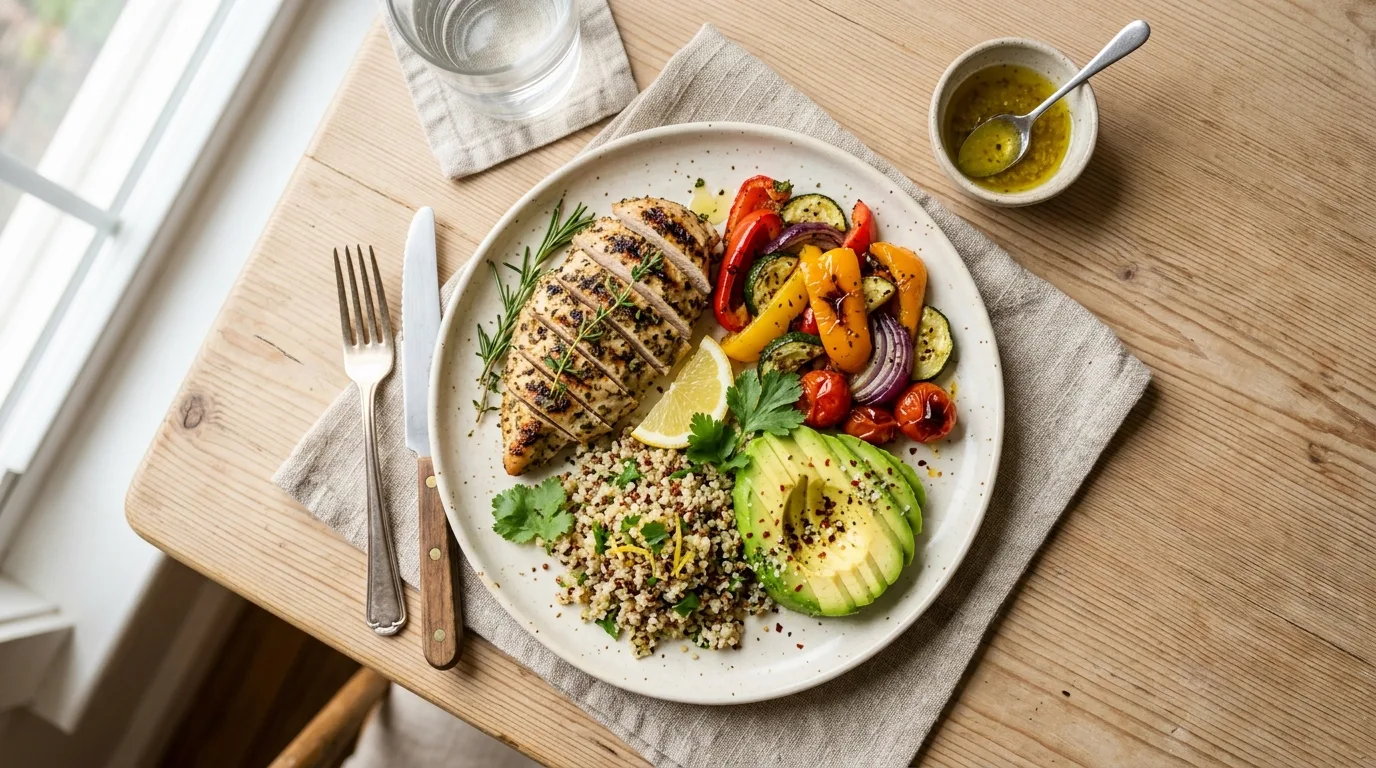
A simple template works better than a rigid menu. Here is one example plate:
A sample balanced plate
- Protein: a palm-sized or larger portion of chicken, fish, eggs, tofu, or beans.
- Vegetables: fill half the plate with a mix of colorful vegetables for fiber and micronutrients.
- Healthy fats: olive oil, avocado, nuts, or seeds.
- Complex carbs: quinoa, brown rice, sweet potato, or whole grains for lasting energy.
Prioritize protein first, since it is the nutrient most people fall short on with one meal. Add fruit or dairy if it helps you close nutrient gaps. You do not need to eat the same thing every night; you just need each meal to be complete rather than a pile of empty calories.
Want a treat inside your window? That is fine occasionally. Just build the nourishing part of the plate first, then add extras with what room is left.
How do you start OMAD safely?
The safest way to start OMAD is to ease into it rather than jumping straight from three meals to one. Begin with a gentler schedule like 16:8 or 18:6 for a few weeks so your body adapts to longer fasts before you attempt a 23-hour stretch. Rushing the transition is what leaves people dizzy and discouraged.
Pick one consistent meal time and protect it. Many people choose an early dinner so they are not eating right before bed, but the best time is the one you can repeat daily. Consistency steadies your hunger signals and makes the fast far easier.
Hydration and habits
Drink water throughout your fasting hours, and know which drinks keep you in the clear. Black coffee, plain tea, and water are the usual safe choices; see what breaks a fast and does coffee break a fast for the details on additives like milk and sugar.
Track your window so you are not guessing. Dawnly has a built-in OMAD plan alongside 16:8, 18:6, 20:4, and custom schedules, plus a fasting timer, streaks, and stats to keep you consistent. Above all, listen to your body: if you feel unwell, faint, or unusually weak, break the fast and eat.
Who should not do OMAD?
Some people should avoid OMAD entirely, because a 23-hour daily fast can be genuinely unsafe for them. This is the part to take seriously, and it is general information rather than medical advice. When in doubt, talk to your doctor before starting.
Skip OMAD if any of these apply to you:
- Pregnant or breastfeeding: your body needs steady nutrition and energy.
- A history of eating disorders or disordered eating: restrictive rules can trigger relapse.
- Diabetes or blood-sugar medication: long fasts can cause dangerous lows without medical supervision.
- Children and teens: growing bodies need regular, balanced meals.
- Underweight or recovering from illness: further restriction is the wrong direction.
If you take any prescription medication, check with a healthcare professional first, since some drugs must be taken with food or on a schedule. Cleveland Clinic and Johns Hopkins Medicine both recommend medical guidance before starting aggressive fasting, and that advice is worth following.
Frequently asked questions
Is OMAD healthy?
OMAD can be healthy for some adults when the single meal is balanced and complete, but it is not right for everyone. The main concern is falling short on protein and nutrients. If you have any medical condition or take medication, ask a doctor whether OMAD is safe for you.
How much weight can you lose on OMAD?
OMAD results vary widely and depend entirely on your total calories, not the schedule itself. Early weight loss often looks fast because of water changes, then settles into a slower, steadier pace. Sustainable fat loss usually lands in the range of about one to two pounds per week for most people.
Can you drink coffee on OMAD?
Yes, plain black coffee is generally fine during your OMAD fast and will not meaningfully break it. Adding milk, cream, or sugar adds calories that can. For the full breakdown of what stays under the line, read does coffee break a fast.
Is OMAD better than 16:8?
Not necessarily. OMAD is more restrictive, but “better” depends on what you can stick with. Many people get similar results from 16:8 or 18:6 with far less strain and lower binge risk. The best schedule is the one you can maintain without misery.
Ready to try one meal a day?
OMAD is one of the simplest ways to eat, and one of the most demanding fasts to hold. Treat it as a step you grow into, keep your one meal balanced and protein-forward, and stop the moment your body tells you something is wrong. For most beginners, starting gentler and building up beats forcing the hardest schedule on day one.
When you are ready, make it easy to stay consistent. Start an OMAD fast and track your window with Dawnly, free on iPhone and Android, with a built-in OMAD plan, timer, streaks, and stats to keep you on schedule.
Track your fasts with Dawnly
A clean timer, flexible plans, and streaks that keep you going. Free on iPhone and Android.
Get Dawnly