
drinks
Does Coffee Break a Fast? Black Coffee, Cream, and What's OK
By Dawnly Team

Plain black coffee does not break a fast. It contains almost no calories, and it may even support fat-burning during your fasting window. What flips coffee from fasting-friendly to fasting-breaking is what you pour into it. Milk, cream, sugar, flavored syrups, and butter all add calories, and calories are what end a fast. So if you have been wondering whether does coffee break a fast applies to your morning cup, the honest answer is that it depends entirely on how you drink it.
Below, you will find a clear breakdown of black coffee, milky coffee, sweeteners, bulletproof coffee, and how each one affects both weight loss and autophagy. This is general information, not medical advice, so check with your doctor if you have health conditions or take medication.
Key Takeaways
- Plain black coffee (about 2 to 5 calories) does not break a fast and may even support fat-burning.
- Milk, cream, sugar, and flavored syrups add calories, so they do break a fast.
- Zero-calorie sweeteners are a gray area: usually fine for weight loss, best skipped for strict autophagy.
- Bulletproof coffee (butter and MCT oil) breaks a traditional fast because of the added fat calories.
- This is general information, not medical advice.
Does black coffee break a fast?
No, black coffee does not break a fast. A plain cup brewed with just water and ground coffee has roughly 2 to 5 calories, which is far too little to meaningfully raise insulin or stop fat-burning. Most fasting approaches treat anything under about 50 calories as negligible.
So drinking black coffee while fasting is widely considered fine. In fact, many people find it helps. Caffeine is a mild appetite suppressant, which makes the hours before your first meal easier to manage.
There is also a metabolic angle. Black coffee can slightly boost your metabolic rate and encourage your body to use stored fat for fuel. That works with a fast rather than against it.
The key word is plain. Espresso, drip, cold brew, or Americano with nothing added all keep you in a fasted state. Once you know that does black coffee break a fast has a simple no attached to it, your morning gets a lot easier.
What about coffee with milk, cream, or sugar?
Yes, coffee with milk, cream, or sugar breaks a fast. These add-ins contain real calories and, in the case of sugar and milk, carbohydrates that trigger an insulin response. Even a splash matters more than people expect once you add it up across a couple of cups.
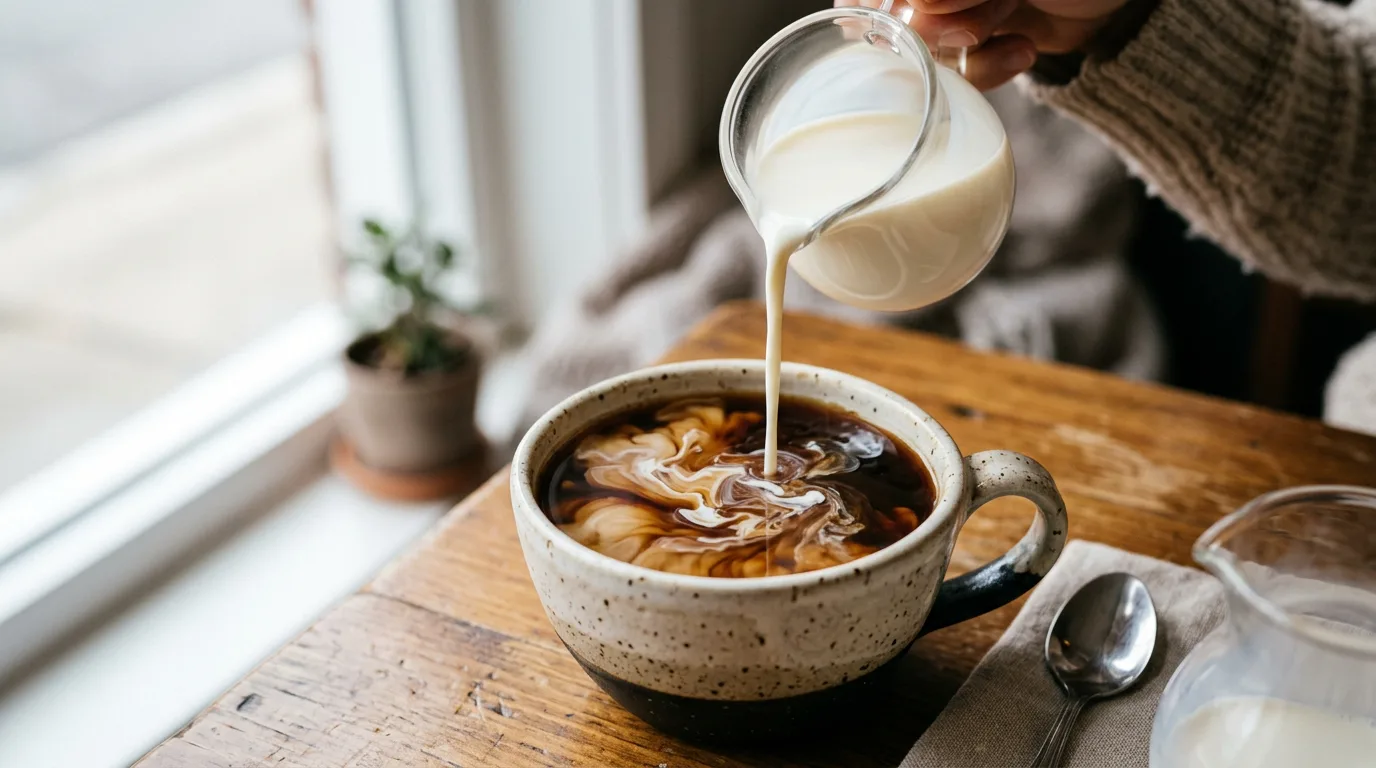
Here is the rough math. A tablespoon of whole milk adds around 9 calories. A tablespoon of half-and-half adds about 20. Heavy cream is closer to 50 per tablespoon. A teaspoon of sugar adds roughly 16 calories and a quick blood sugar bump.
So does coffee with cream break a fast? Yes. Cream is mostly fat, and while fat causes a smaller insulin response than sugar, it still delivers calories your body has to process. That interrupts the fasted state most people are aiming for.
Drinking coffee with milk while fasting works the same way. One splash may seem harmless, but two or three milky coffees across a morning can easily reach 50 to 100 calories. At that point you are no longer fasting, you are just eating very lightly.
If your goal is a clean fast, keep it black. If you want the full picture on which extras count, see our hub on what breaks a fast.
Sweeteners and “zero calorie” add-ins
Sweeteners sit in a gray area. Pure calorie-free options like stevia, monk fruit, erythritol, and most artificial sweeteners add essentially no calories, so they usually do not break a fast in the weight-loss sense. Whether they affect other goals is where the nuance begins.
The concern with sweeteners is not calories, it is insulin and appetite. Some people show a small insulin response to sweet taste alone, and sweeteners can intensify cravings for some individuals. In practice, most tolerate a few drops of stevia or a sugar-free tablet without stalling fat loss.
Watch the products that hide sugar. “Sugar-free” syrups are often fine, but many coffee-shop flavor pumps are loaded with sugar. A single flavored latte can carry more sugar than a dessert.
Here is the distinction that matters. If your only goal is weight loss, calorie-free sweeteners are generally safe during a fast. If you are chasing autophagy or a strict metabolic reset, keeping your fast to water and black coffee is the cleaner choice.
Bulletproof coffee and fasting
Bulletproof coffee breaks a traditional fast. It blends black coffee with butter and MCT oil, which pushes a single cup to roughly 200 to 450 calories depending on how much fat you add. By any standard calorie definition, that ends your fast.
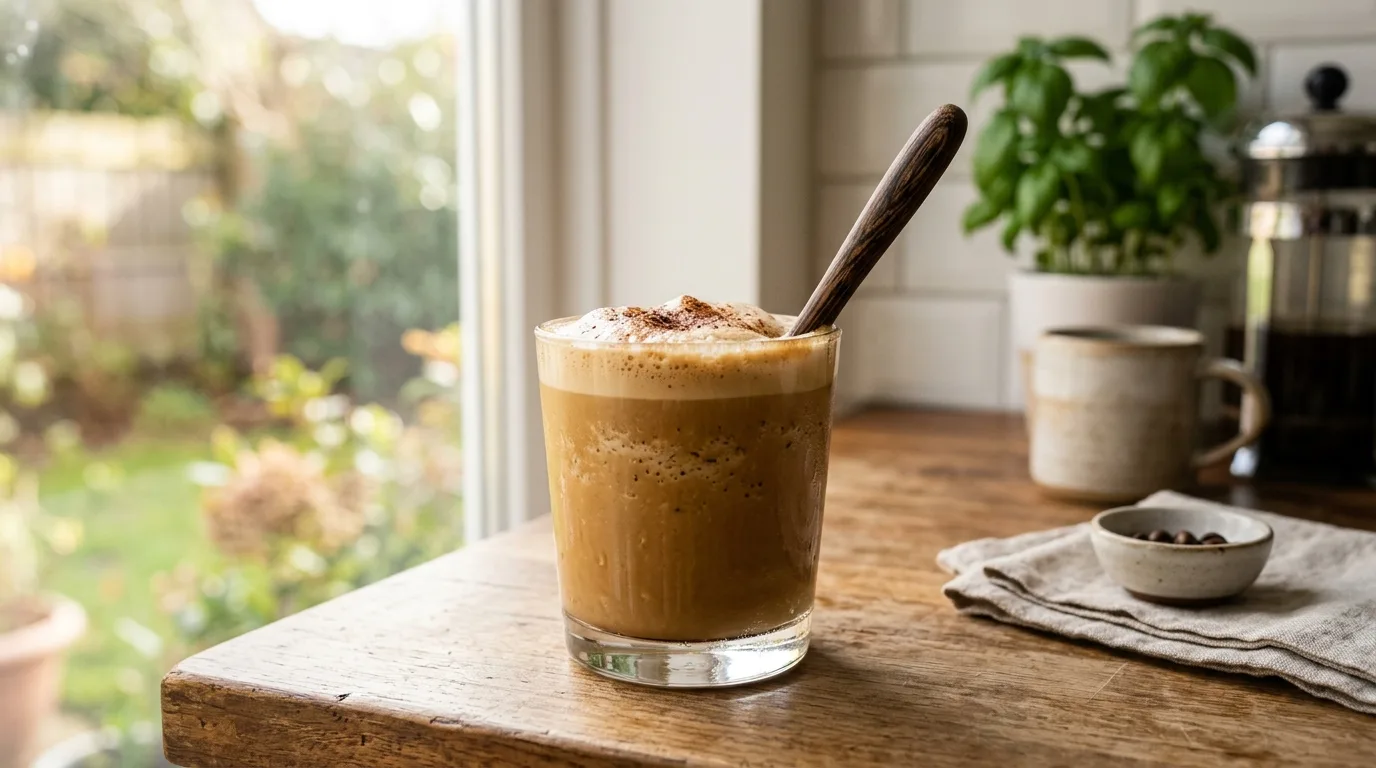
So why do so many people drink it while “fasting”? Because bulletproof coffee fasting relies on a different idea called a fat fast. The theory is that pure fat keeps insulin very low, so you stay in ketosis and keep burning fat even though you consumed calories.
There is some logic to it. Fat causes little to no insulin release, so bulletproof coffee will not spike blood sugar. If your primary goal is appetite control and staying in ketosis, it can serve a purpose.
But be clear about the trade-off. Bulletproof coffee does break a fast for autophagy and for a true zero-calorie fast. It also adds meaningful calories to your day, which matters if you are counting them for weight loss.
It is a common mistake to treat bulletproof coffee as a free pass during a 16:8 window, then wonder why the scale stalls. Those 300 or so calories count, every time.
If fat loss is the target, plain black coffee is the safer bet. For the bigger strategy, our guide to intermittent fasting for weight loss covers how calories fit the picture.
Does coffee affect autophagy or just weight loss?
The honest answer is goal-dependent. For weight loss, black coffee is fine because it has almost no calories. For autophagy, the cellular cleanup process that ramps up during longer fasts, the standard is stricter, and even small inputs can matter more.
Black coffee itself may not shut down autophagy, and some research suggests certain coffee compounds could even support it. But this area is still being studied, so treat strong claims with caution. Nobody should promise you exact numbers here.
The useful framing is a spectrum, not a switch. A “fast” is not one single state. There is a weight-loss fast, where under 50 calories barely registers, and a stricter autophagy fast, where you want as close to nothing as possible. Black coffee passes the first test easily and probably the second, while anything with calories fails the strict version.
So decide your goal first. If you fast to lose weight or control appetite, coffee is a helpful tool. If you fast for deeper cellular benefits, keep it black or stick to water. Organizations like Cleveland Clinic and Johns Hopkins Medicine publish balanced overviews of fasting if you want reputable background reading.
How much black coffee is okay while fasting?
Most healthy adults can safely have up to about 400 milligrams of caffeine a day, which is roughly three to four cups of black coffee, according to guidance echoed by health bodies like the U.S. Food and Drug Administration. During a fast, moderation matters even more because you are not buffering caffeine with food.
Keep a few practical points in mind:
- Hydrate alongside it. Coffee is mildly diuretic, so drink water too. Fasting already lowers your food-based fluid intake.
- Watch the jitters. On an empty stomach, caffeine can hit harder and cause shakiness or nausea for some people.
- Mind the timing. Coffee late in the day can disrupt sleep, and poor sleep undermines fasting results.
- Listen to your gut. Black coffee can irritate a sensitive stomach when you have not eaten.
A reasonable rhythm is one to three cups spread across your fasting window, stopping in the early afternoon. Start your morning fast and track it with Dawnly, so you can see how coffee fits your timer without guesswork.
Frequently asked questions
Does black coffee break a fast?
No. Black coffee has only about 2 to 5 calories per cup, which is not enough to break a fast or meaningfully raise insulin. It may even support fat-burning. Just keep it plain, with no milk, cream, sugar, or syrups added.
Does coffee with cream break a fast?
Yes. Cream adds calories, roughly 50 per tablespoon for heavy cream, so it ends a true fast. Fat causes a smaller insulin response than sugar, but the calories still count, especially across multiple cups. For a clean fast, drink your coffee black.
Can I drink coffee during 16:8?
Yes. Black coffee is one of the most popular drinks during a 16:8 fasting window. It has almost no calories, helps blunt hunger, and keeps you alert. Keep it unsweetened during your fasting hours, and save the milk or sugar for your eating window.
Does coffee break autophagy?
Probably not, if it is black. Plain black coffee has negligible calories, and some compounds in coffee may even support autophagy, though research is ongoing. Anything with calories, like milk or bulletproof coffee, does interrupt an autophagy-focused fast. When in doubt, stick to water.
The bottom line
Black coffee is one of the few things you can enjoy freely during a fast. It keeps you in a fasted state, curbs hunger, and may nudge fat-burning along. The moment you add milk, cream, sugar, or butter, you add calories, and calories break the fast.
Match your coffee to your goal. For weight loss, a few black cups are a genuine ally. For strict autophagy, keep it black or choose water. Ready to put this into practice? Start your morning fast and track it with Dawnly.
Track your fasts with Dawnly
A clean timer, flexible plans, and streaks that keep you going. Free on iPhone and Android.
Get Dawnly