food
How to Break a Fast (Without Undoing Your Progress)
By Dawnly Team

Breaking a fast the right way matters just as much as the fast itself. Whether you skipped breakfast or went a full day without eating, how you break a fast affects your digestion, energy, and how you feel for the rest of the day. The good news: for most short daily fasts, you can eat a normal, balanced meal without any special ritual. Longer fasts need more care.
This guide walks you through what to eat, what to skip, and how to reintroduce food gently after longer fasts. Organizations like the Cleveland Clinic and Johns Hopkins Medicine note that intermittent fasting is generally safe for healthy adults, but individual needs vary.
Key Takeaways
- For short daily fasts (12 to 16 hours), a normal balanced meal is usually fine.
- After longer fasts, start small with easy-to-digest, protein and fiber-forward foods.
- Avoid large sugary or greasy meals right after any fast to prevent discomfort.
- Refeeding syndrome is a real risk after multi-day fasts and needs medical guidance.
- This is general information, not medical advice.
How do you break a fast?
You break a fast by eating your first meal after your fasting window ends, and the safest approach depends on how long you fasted. For short daily fasts, a balanced meal works fine. For longer fasts, start with a small, gentle portion and let your digestion ease back in slowly.
Your digestive system slows down while you fast. After a short 16-hour window, it bounces back quickly, so a regular plate of food rarely causes problems. After a day or more without eating, though, a huge meal can leave you bloated, nauseated, or sluggish. Think of it as easing off the brakes rather than flooring the gas.
The length of your fast is the biggest factor. A good rule: the longer you fasted, the smaller and simpler your first bite should be. Want to understand the timing details? See our guide on what to eat after fasting.
Best foods to break a fast
The best foods to break a fast are gentle, nutrient-dense, and easy to digest. The Cleveland Clinic and Mayo Clinic both emphasize whole foods, lean protein, healthy fats, and fiber over processed or sugary options. These foods steady your blood sugar and keep you full without overwhelming your stomach after a break from eating.

Here are reliable choices that sit well after most fasts:
Protein-forward foods
Eggs, Greek yogurt, cottage cheese, fish, or chicken deliver protein that supports muscle and keeps you satisfied. Protein digests steadily and helps blunt the blood-sugar spike you might get from carbs alone. A couple of scrambled eggs make a classic, gentle first meal.
Fiber and produce
Cooked vegetables, leafy greens, avocado, and berries add fiber, vitamins, and water. Cooked or steamed vegetables are easier on your gut than raw ones right after a longer fast. Fiber also slows digestion in a helpful way, keeping energy even.
Fluids and simple carbs
Water, broth, and soups rehydrate you and are especially soothing after longer fasts. If you add carbohydrates, choose whole options like oats, quinoa, or a piece of fruit rather than refined sugar. Bone broth is a popular first step because it is warm, salty, and easy to sip.
Foods to avoid when breaking a fast
Avoid large, greasy, and sugar-heavy meals when breaking a fast, because they can trigger bloating, nausea, and energy crashes. The Mayo Clinic warns that highly processed foods and added sugars work against the metabolic benefits many people seek from fasting. After a fast, your body is especially sensitive to a sudden flood of refined carbs.
Steer clear of these common pitfalls:
- Fried and fast foods, which are heavy, greasy, and slow to digest after your stomach has been resting.
- Sugary drinks and desserts, which spike blood sugar fast and often lead to a crash an hour later.
- Large portions, even of healthy food, since volume alone can cause discomfort after a long fast.
- Alcohol on an empty stomach, which hits harder and can worsen dehydration.
The temptation to reward a long fast with a big treat is real. But a giant sugary meal often undoes the calm, steady feeling fasting can bring. If you are unsure whether a food or drink even counts as breaking your fast, read what breaks a fast for the details.
How to break a longer fast (24 hours or more) gently
To break a 24-hour fast or longer, start with a small portion of easy-to-digest food and wait before eating more. The NIH and Johns Hopkins Medicine advise caution with extended fasts, since your digestion and appetite signals shift over longer periods. A gentle, staged approach reduces discomfort and lowers risk.
Try this simple sequence after a long fast. Begin with something light like broth, a small serving of yogurt, or a few pieces of soft fruit. Wait 30 to 60 minutes and notice how you feel. If your stomach is settled, add a modest protein and vegetable portion. Save your normal-sized meals for a few hours later once you know your system has adjusted.
Portion size matters more than food choice here. Even perfect foods in large amounts can overwhelm you after a day or more without eating. Sip water throughout, and stop eating before you feel completely full.
Longer water-only fasts deserve extra planning from start to finish. Our water fasting guide covers preparation and safe breaking in more depth.
Refeeding syndrome: why long fasts need care
Refeeding syndrome is a serious, potentially dangerous shift in fluids and electrolytes that can occur when food is reintroduced too quickly after prolonged fasting or malnutrition. The NIH describes it as a real medical risk that typically requires professional monitoring. It is uncommon after a single skipped day but becomes a genuine concern after multi-day fasts.
Here is what happens in plain terms. During an extended fast, your body depletes stores of minerals like phosphate, potassium, and magnesium. When you suddenly eat, especially carbohydrates, your body pulls those minerals out of your blood fast, which can strain your heart and nervous system. Warning signs can include swelling, weakness, confusion, or an irregular heartbeat.
This is why anyone planning a fast lasting several days should talk with a doctor first. Medical supervision, careful electrolyte monitoring, and slow refeeding are standard precautions. If you have a health condition, take medication, or are underweight, professional guidance is not optional. When in doubt, break the fast sooner and check in with a clinician.
A sample fast-breaking meal
A simple, balanced first meal combines lean protein, gentle carbs, healthy fat, and fluids in a modest portion. Nutrition guidance from the Cleveland Clinic points toward whole-food combinations like this over processed convenience options. The goal is steady energy and easy digestion, not a feast.
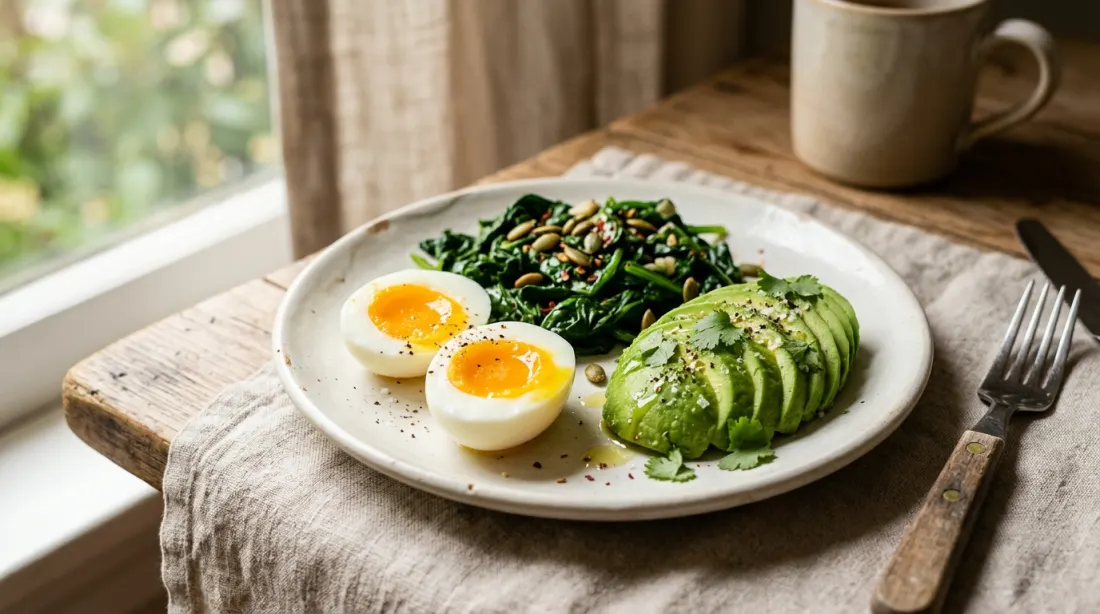
Here is one easy example you can adapt:
- Two scrambled or boiled eggs for protein that digests smoothly.
- A small handful of cooked spinach or a few berries for fiber and micronutrients.
- Half an avocado or a drizzle of olive oil for healthy fat and staying power.
- A glass of water and, after a longer fast, a cup of warm broth to rehydrate.
For a short daily fast, you can scale this up to a full, satisfying plate. After a 24-hour fast, keep it small and add the rest an hour later. Pairing your eating window with your goals also helps. If weight is your focus, see intermittent fasting for weight loss for how meals fit the bigger picture.
Frequently asked questions
What should I eat first to break a fast?
Start with something gentle and protein-forward, like eggs, Greek yogurt, or a cup of broth. The Cleveland Clinic recommends whole, minimally processed foods over sugary or fried options. After a short daily fast you can eat a normal meal, but after a longer fast, keep that first portion small.
How long should I wait between my first bite and a full meal?
After a long fast of 24 hours or more, wait roughly 30 to 60 minutes after a small first serving before eating a larger portion. This gives your digestion time to restart. For short daily fasts, no waiting is needed, and a balanced meal is generally fine right away.
Can breaking a fast make you feel sick?
Yes, eating too much or too fast, especially greasy or sugary food, can cause bloating, nausea, and fatigue. Mayo Clinic notes that heavy, processed meals are harder to digest. Smaller portions of whole foods usually prevent this. If discomfort is severe or persistent, contact a healthcare provider.
Is refeeding syndrome a risk after a 24-hour fast?
Refeeding syndrome is rare after a single 24-hour fast in a healthy adult and becomes a serious concern mainly after multi-day fasts or in people who are malnourished. The NIH treats it as a condition needing medical oversight. If you fast for several days, seek a doctor’s guidance first.
Breaking a fast well comes down to matching your first meal to how long you fasted: a normal balanced plate after short daily windows, and small, gentle, whole-food portions after longer ones. Skip the giant sugary or greasy meals, stay hydrated, and get medical advice before any multi-day fast. Ready to build a fasting routine you can stick with? Dawnly is a free intermittent fasting tracker with a timer, flexible plans, streaks, and stats to help you fast and refuel with confidence.
Track your fasts with Dawnly
A clean timer, flexible plans, and streaks that keep you going. Free on iPhone and Android.
Get Dawnly