
plans
18/6 Intermittent Fasting: Schedule, Benefits & How to Start
By Dawnly Team

18/6 intermittent fasting means you fast for 18 hours each day and eat all your meals within a 6-hour window. It is a step up from the popular 16/8 method, giving your body a longer daily break from food while still fitting into a normal daily routine.
If you have tried 16/8 and want a bigger challenge, the 18/6 schedule is a natural next step. Many people find the two extra fasting hours help curb evening snacking without feeling extreme. Below you will learn how it works, who it suits, and how to start safely.
Key Takeaways
- 18/6 intermittent fasting splits your day into an 18-hour fast and a 6-hour eating window.
- It may support weight loss by lowering overall calorie intake and improving insulin sensitivity.
- The Cleveland Clinic notes that time-restricted eating can help some people manage weight and blood sugar.
- Start by narrowing your eating window gradually, and drink plenty of water during the fast.
- This is general information, not medical advice.
What is 18/6 intermittent fasting?
18/6 intermittent fasting is a time-restricted eating pattern where you fast for 18 hours and eat during a 6-hour window each day. According to the Cleveland Clinic (Cleveland Clinic), time-restricted eating limits when you eat rather than what you eat, which many people find simpler to follow.
The idea is straightforward. You pick a 6-hour window, for example noon to 6 p.m., and eat all your meals inside it. Outside that window, you drink only water, black coffee, or plain tea.
Because your body spends more hours without incoming food, it shifts toward burning stored energy. This longer fasting period is what separates 18/6 from gentler schedules.
Want a bigger jump? Some people move from 18/6 toward OMAD (one meal a day), which shrinks the window even further.
How does 18/6 work for weight loss?
18/6 supports weight loss mainly by reducing the hours you can eat, which often lowers total daily calories. Johns Hopkins Medicine (Johns Hopkins Medicine) explains that intermittent fasting can shift the body into fat-burning mode once glucose stores run low, a process sometimes called metabolic switching.

When you fast for 18 hours, insulin levels fall. Lower insulin makes it easier for your body to access fat for fuel. Over time, this can contribute to gradual fat loss when paired with balanced meals.
There is also a behavioral effect. A shorter eating window naturally cuts out late-night snacking, which is a common source of extra calories.
Still, fasting is not magic. If your 6-hour window is filled with oversized, ultra-processed meals, weight loss may stall. For a broader view, see our guide to intermittent fasting for weight loss.
One point worth stressing: 18/6 works best as a sustainable habit, not a short crash effort. Consistency across weeks matters far more than perfection on any single day.
18/6 vs 16/8: which should you choose?
Choosing between 18/6 and 16/8 comes down to your experience and goals. The 16/8 method, with its 8-hour eating window, is often recommended for beginners because it is easier to maintain, while 18/6 offers a longer fast that some find more effective for appetite control, as noted by Mayo Clinic (Mayo Clinic).
Think of it as a spectrum. The 16/8 schedule asks for a modest change to your day. The 18/6 schedule tightens things by two hours, which can feel meaningfully harder at first.
When 16/8 makes sense
Pick 16/8 if you are new to fasting, have a busy family dinner routine, or simply want an approach you can keep up long term. It leaves room for breakfast or a later dinner.
When 18/6 makes sense
Choose 18/6 if you already handle 16/8 comfortably and want a stronger appetite-control effect. The narrower window can also simplify meal planning, since you are cooking for fewer hours.
Neither schedule is universally better. In practice, the best plan is the one you can follow without dread.
A sample 18/6 schedule
A typical 18/6 schedule places your eating window in the middle of the day or early afternoon. Research summarized by the National Institutes of Health (NIH) suggests earlier eating windows may align better with the body’s circadian rhythm, potentially improving blood sugar control.
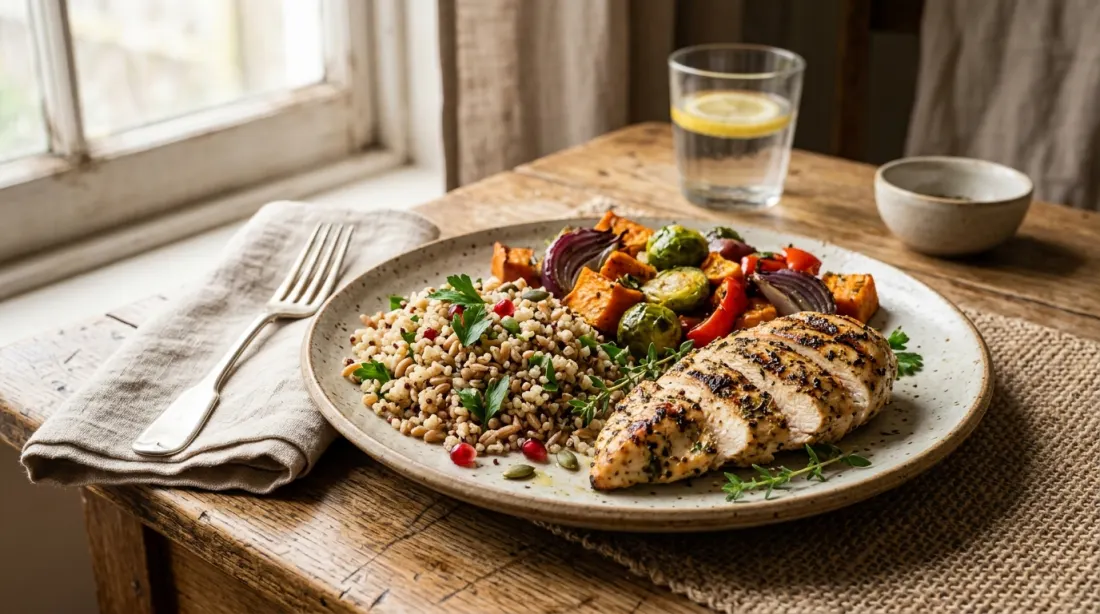
Here is one common structure:
- 12:00 p.m. - Break your fast with a balanced meal: protein, fiber, and healthy fats.
- 3:00 p.m. - A light snack or second meal if you are still hungry.
- 6:00 p.m. - Final meal of the day, then close your eating window.
- 6:00 p.m. to 12:00 p.m. - Fasting period. Water, black coffee, and plain tea are fine.
You can shift the whole window earlier or later to match your life. A shift worker might eat from 4 p.m. to 10 p.m. instead.
Curious what you can sip without ending the fast? Our article on what breaks a fast covers coffee, tea, and common gray areas.
Benefits of 18/6 fasting
The 18/6 intermittent fasting benefits reported in research include weight management, better insulin sensitivity, and reduced inflammation for some people. The Harvard T.H. Chan School of Public Health (Harvard T.H. Chan School of Public Health) notes that intermittent fasting may improve markers linked to metabolic health, though individual results vary.
Metabolic benefits
A longer daily fast gives insulin more time to drop, which may improve how your body handles blood sugar. This is one reason time-restricted eating draws interest from researchers studying type 2 diabetes risk.
Simplicity and structure
Many people value the mental simplicity. With only 6 hours to eat, you make fewer food decisions, which can reduce snacking and grazing.
Possible cellular effects
Some studies point to autophagy, a natural cellular cleanup process, during longer fasts. The evidence in humans is still developing, so treat this as promising rather than proven.
Remember that benefits depend on food quality too. Filling your window with whole foods amplifies the payoff far more than fasting alone.
How to start 18/6 (tips)
The easiest way to start 18/6 is to shorten your eating window gradually rather than jumping straight in. Registered dietitians cited by the Cleveland Clinic (Cleveland Clinic) recommend easing into fasting to reduce side effects like fatigue, irritability, and headaches during the adjustment period.
Try this step-by-step approach:
- Begin with 16/8 for one to two weeks so your body adapts.
- Trim 30 minutes off your eating window every few days until you reach 6 hours.
- Front-load protein and fiber at your first meal to stay full longer.
- Hydrate constantly. Water, sparkling water, and unsweetened tea help blunt hunger.
- Time your window around your day. Anchor it to when you feel hungriest.
Expect an adjustment week. Early hunger pangs usually fade as your body adapts to the new rhythm.
A fasting tracker removes the guesswork. Dawnly includes a built-in 18/6 plan, so the timer, streaks, and stats are set up for you from the start.
If hunger spikes hard in the evenings, that is normal at first. A cup of tea and an earlier bedtime often bridge the gap.
Who should be careful
18/6 fasting is not right for everyone, and certain groups should avoid it or seek medical guidance first. The Mayo Clinic (Mayo Clinic) advises that intermittent fasting may not be safe for people who are pregnant, breastfeeding, or managing certain health conditions.
You should talk with a healthcare provider before starting if you:
- Are pregnant, breastfeeding, or trying to conceive.
- Have a history of disordered eating.
- Take medication that requires food, such as certain diabetes drugs.
- Are underweight or under 18.
- Have diabetes, low blood pressure, or another chronic condition.
Longer fasts amplify these considerations. What feels manageable at 16/8 can hit harder at 18/6, especially around blood sugar and energy.
Listen to your body. Persistent dizziness, extreme fatigue, or mood changes are signals to loosen your schedule or stop.
Frequently asked questions
Can I drink coffee during the 18-hour fast?
Yes, plain black coffee is generally fine during your fast and will not break it for most people. Adding sugar, cream, or milk introduces calories that can interrupt the fasted state. The Cleveland Clinic notes that calorie-free drinks like black coffee, water, and plain tea are acceptable during time-restricted eating.
How long until I see results with 18/6?
Results vary widely, but many people notice changes in appetite and energy within one to two weeks. Visible weight changes typically take several weeks and depend on your overall diet and activity. Johns Hopkins Medicine emphasizes that consistency over weeks and months drives the most meaningful metabolic benefits.
Is 18/6 better than 16/8?
Neither is objectively better; the right choice depends on your experience and lifestyle. The 18/6 schedule offers a longer fast that may help with appetite control, while 16/8 is easier to sustain. Mayo Clinic suggests starting with a gentler window and progressing only if it feels comfortable and safe.
What can I eat during my 6-hour window?
Focus on whole foods: lean protein, vegetables, fruits, whole grains, and healthy fats. A shorter window does not mean you should overeat processed foods. The Harvard T.H. Chan School of Public Health recommends prioritizing nutrient density, since food quality shapes your results as much as timing does.
Ready to try 18/6?
An 18/6 schedule can be a simple, sustainable way to manage your eating, as long as you ease in and keep your meals balanced. Start slow, stay hydrated, and pay attention to how you feel. If a longer fast ever feels like too much, dialing back to 16/8 is always a smart move.
Want help staying consistent? Dawnly offers a free 18/6 plan with a clean timer, streaks, and stats to keep you on track from day one.
Track your fasts with Dawnly
A clean timer, flexible plans, and streaks that keep you going. Free on iPhone and Android.
Get Dawnly