
plans
The 5:2 Diet: How It Works, Meal Plan & Results
By Dawnly Team
The 5:2 diet is a form of intermittent fasting where you eat normally five days a week and cut back to about 500 to 600 calories on the other two days. You don’t skip food entirely on those two days, so the 5:2 diet is really structured calorie restriction rather than a true fast. It became popular after a 2012 UK documentary and book, and it remains one of the simplest fasting patterns to follow.
Why do so many people prefer it over daily dieting? You only watch your calories closely on two days, and the rest of the week feels normal. That flexibility is the whole appeal, and it’s why the 5:2 intermittent fasting approach keeps showing up in mainstream health coverage.
Key Takeaways
- On the 5:2 diet you eat normally five days and eat about 500 to 600 calories on two non-consecutive fasting days.
- Because fasting days still include food, this is calorie restriction, not a zero-calorie fast.
- Weight loss comes mainly from eating fewer total calories across the week.
- Organizations like the Cleveland Clinic and NHS note it may suit some people but isn’t right for everyone.
- This is general information, not medical advice.
What is the 5:2 diet?
The 5:2 diet is an intermittent fasting pattern that splits your week into five regular eating days and two reduced-calorie days. On fasting days, women typically aim for around 500 calories and men for around 600, according to guidance summarized by the NHS. The two lower-calorie days are usually spaced apart, not back to back.
The name is simple math. Five days of normal eating, two days of restriction. Unlike time-based methods such as 16:8, where you fast for part of each day, the 5:2 plan focuses on the whole week.
Here’s the key point many people miss. Those “fasting” days aren’t fasts in the strict sense. You’re still eating a small amount, so your body isn’t in the fully fasted state you’d reach by consuming zero calories. That distinction matters when you read about what happens during a real fast.
If you’re comparing methods, it helps to understand the broader category first. Our guide to intermittent fasting for weight loss breaks down how the main patterns differ.
How the 5:2 diet works for weight loss
The 5:2 diet works for weight loss mainly by lowering your total weekly calorie intake, a mechanism the Mayo Clinic describes as the foundation of most fasting-based approaches. Two low-calorie days create a weekly deficit, even if your other five days stay roughly the same. Less energy in over the week generally means gradual fat loss.
Think about the arithmetic. If two days drop from a typical intake down to 500 or 600 calories, you naturally shave off a large chunk of your weekly total. You don’t have to count every bite on the other days for the pattern to produce a deficit.
Some researchers, including teams reviewed by Johns Hopkins Medicine, suggest intermittent fasting may also shift how the body uses energy between meals. Still, the most reliable driver here is simple: eating less overall.
One honest caveat. If you overeat heavily on your five normal days, you can cancel out the deficit from your two fasting days. The plan only works when your regular days stay reasonable.
What to eat on your fasting days (500-600 calories)
On 5:2 fasting days, focus on high-protein, high-fiber, high-volume foods that keep you full on very few calories, a strategy dietitians at the Cleveland Clinic recommend for appetite control. Think eggs, non-starchy vegetables, lean fish or chicken, soup, and plain yogurt. These foods stretch a small calorie budget further than refined carbs or fried options.

Vegetables are your best friend on these days. A large plate of leafy greens, peppers, and broccoli adds bulk and nutrients for very little energy. Pair that with a palm-sized portion of protein and you feel far more satisfied.
Hydration matters too. Water, black coffee, and plain tea add almost no calories while helping you manage hunger. If you’re unsure whether your morning drink counts, our breakdown of what breaks a fast explains where common beverages land.
Sample fasting-day foods
- Two eggs scrambled with spinach
- A bowl of vegetable soup, no cream
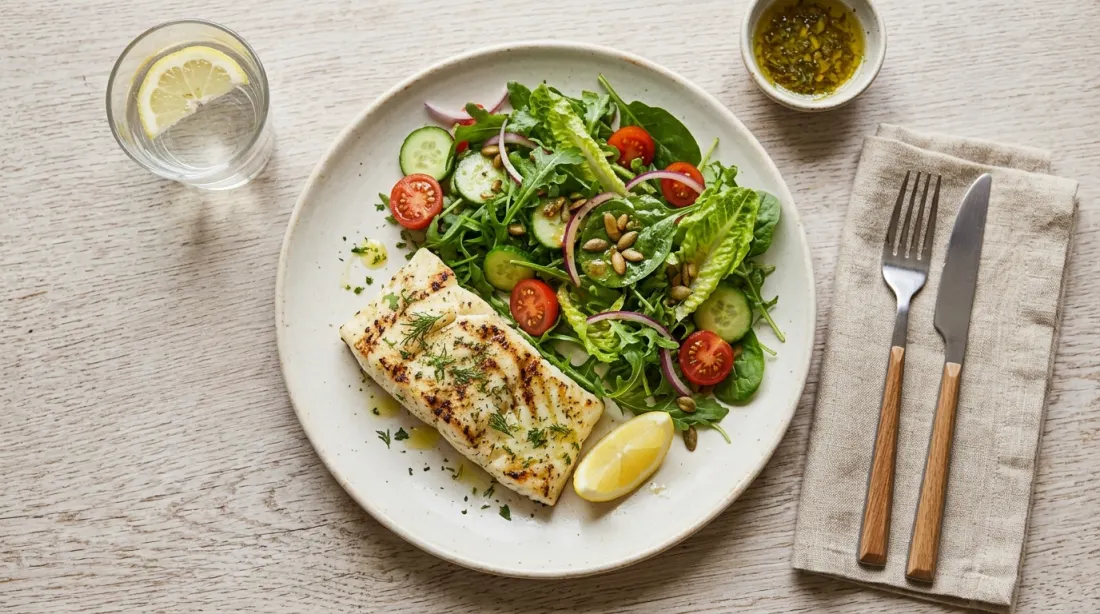
- Grilled white fish with a big salad
- Plain Greek yogurt with a few berries
- Black coffee, tea, and plenty of water
Foods to limit on fasting days
Skip sugary drinks, pastries, and large portions of bread, pasta, or rice. They burn through your small calorie allowance fast and leave you hungry again within an hour. Save those for your regular days, in sensible amounts.
A sample 5:2 week
A typical 5:2 week places the two fasting days on non-consecutive days, such as Monday and Thursday, a spacing pattern the NHS suggests to make the routine sustainable. The remaining five days follow normal, balanced eating without strict counting. This rhythm gives your week structure while leaving most days flexible.

Here’s how a week might look:
- Monday: Fasting day, around 500 to 600 calories
- Tuesday: Normal balanced eating
- Wednesday: Normal balanced eating
- Thursday: Fasting day, around 500 to 600 calories
- Friday: Normal balanced eating
- Saturday: Normal balanced eating
- Sunday: Normal balanced eating
Notice the gap between Monday and Thursday. That spacing keeps you from feeling deprived two days in a row, which makes the pattern easier to stick with long term.
You can shift the days to fit your schedule. Many people choose fasting days when they’re busy at work and less focused on food, then keep weekends open for social meals.
Benefits of the 5:2 diet
The main benefit of the 5:2 diet is simplicity, and research summarized by Harvard T.H. Chan School of Public Health suggests intermittent fasting can support weight loss comparable to daily calorie restriction for some people. You only track calories two days a week, which many find easier than counting every day. That reduced mental load is a real advantage.
Beyond weight, some studies reviewed by the NIH have looked at whether intermittent fasting affects blood sugar, insulin sensitivity, and other markers. Results vary, and researchers stress that more long-term human data is needed before drawing firm conclusions.
There’s also a behavioral upside. Because most days feel normal, the plan tends to fit real life better than restrictive diets that ban entire food groups. You keep your favorite meals, just with two lighter days built in.
Flexibility is worth repeating. You can move your fasting days, pause during holidays, and restart easily. A plan you can actually follow beats a stricter one you quit.
Downsides and who should avoid it
The 5:2 diet isn’t right for everyone, and both the Mayo Clinic and NHS caution that certain groups should avoid intermittent fasting without medical guidance. On very low-calorie days, some people feel irritable, tired, dizzy, or unable to concentrate. Those side effects usually fade as your body adapts, but not always.
Some people should not try the 5:2 diet on their own. This includes those who are pregnant or breastfeeding, people with a history of disordered eating, those with diabetes managed by medication, and anyone underweight. Children and teens are generally not candidates either.
There’s a practical risk too. Fasting days can trigger strong hunger that leads to overeating the next day, which undoes the deficit. If you notice this pattern, the approach may not suit you.
When in doubt, talk to a doctor or registered dietitian before starting. That’s especially important if you take medication or manage a chronic condition.
How to start the 5:2 diet
To start the 5:2 diet, pick two non-consecutive days for calorie restriction and plan simple 500 to 600 calorie meals in advance, an approach dietitians at the Cleveland Clinic say improves adherence. Preparation is the difference between a smooth fasting day and a frustrating one. Decide what you’ll eat before hunger makes the choice for you.
Start gradually if you’re new to fasting. Some people ease in with one fasting day the first week, then add the second. This softer entry helps your body and habits adjust.
Track your days so you stay consistent. A simple timer or streak counter keeps the two-day rhythm from slipping, and seeing your progress helps motivation. Keep water nearby, stay busy on fasting days, and don’t overthink your normal days.
Give it a few weeks before judging results. Weight changes are gradual, and week-to-week fluctuations are normal.
Frequently asked questions
Is the 5:2 diet actually a fast?
Not in the strict sense. On the two low-calorie days you still eat roughly 500 to 600 calories, so your body isn’t in a fully fasted state. As sources like the NHS describe it, the 5:2 plan is best understood as structured calorie restriction rather than a true zero-calorie fast.
How much weight can you lose on the 5:2 diet?
Results vary widely by person, starting weight, and how consistent you are. The Mayo Clinic notes that weight loss from intermittent fasting comes down to your overall calorie deficit. Steady, gradual loss is more typical and more sustainable than fast drops, so patience matters here.
Can you exercise on 5:2 fasting days?
Light to moderate activity like walking or gentle strength work is usually fine on fasting days for healthy adults. Harder workouts may feel tougher on low fuel, so listen to your body. Organizations like the NHS advise checking with a doctor first if you have any health concerns before combining fasting and intense exercise.
What can you drink on fasting days?
Water, black coffee, and plain tea are your safest choices because they add almost no calories. Avoid sugary drinks, juice, and calorie-heavy coffees that eat into your small allowance. If you’re unsure whether something counts, our guide to what breaks a fast covers common drinks in detail.
Ready to try the 5:2 rhythm with less guesswork? Dawnly is a free intermittent fasting tracker with a simple timer, flexible plans, streaks, and stats to help you stay consistent across your fasting days. Track your two low-calorie days, watch your streak grow, and build a routine that fits your week.
Track your fasts with Dawnly
A clean timer, flexible plans, and streaks that keep you going. Free on iPhone and Android.
Get Dawnly